





AS SEEN ON

Tests.com has been honored with the Academics' Choice Smart Media Award, a prestigious seal of educational quality. The Academics' Choice Advisory Board consists of leading thinkers and graduates from Princeton, Harvard, George Washington University, and other distinguished institutions of learning.
10 Test Prep Tips


How you prepare for a test can be the difference between a low score and a high score. How do you prepare?
- Study well in advance, don't cram
- Study to learn the material
- Follow a regular study schedule
- Use quality study materials: text books, flashcards, study guides, practice tests, etc.
- Highlight key points in your notes
- Utilize discussion groups
- Take a timed practice test
- Tab and highlight for open book tests
- Study with friends
- Don't study the night before the test
10 Test Taking Tips

How should you take tests? These proven test techniques will increase your score and lower your stress!.
- Get a good rest the night before
- Eat a good meal before the test
- Get to the testing location early
- Read & understand each question
- Form an answer in your mind
- Read all the answers
- Eliminate obviously wrong answers
- Don't get stuck on hard questions
- Pace yourself
- Maintain a positive attitude
World Class Test Prep
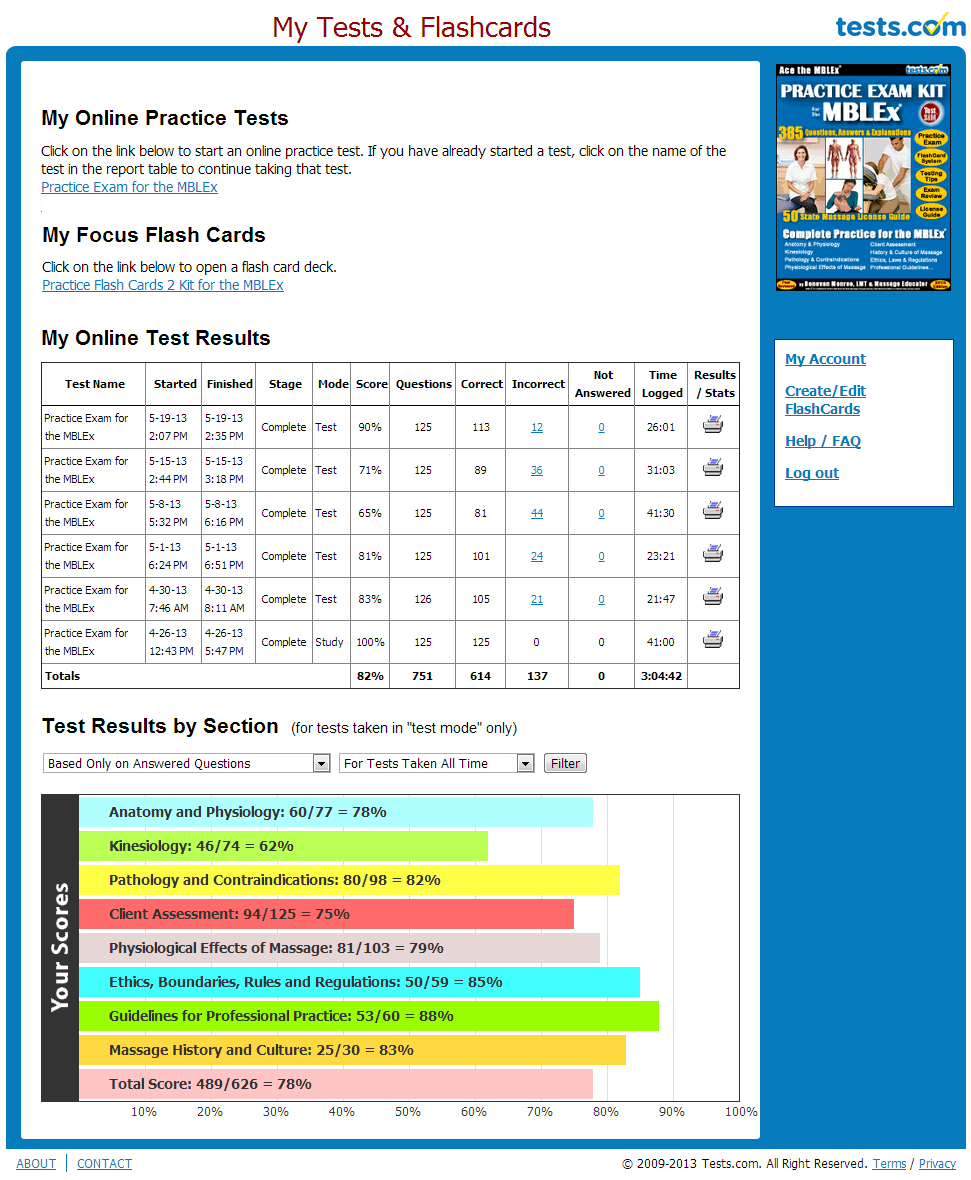
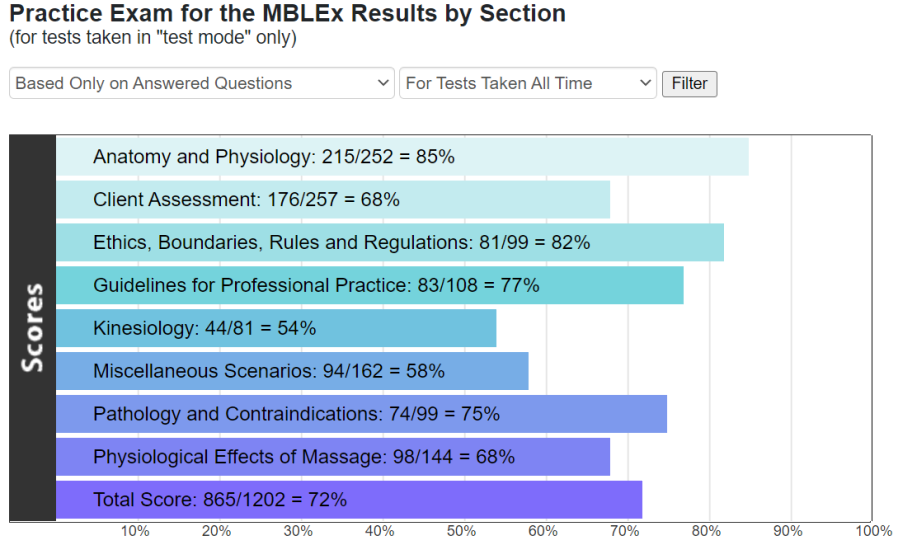
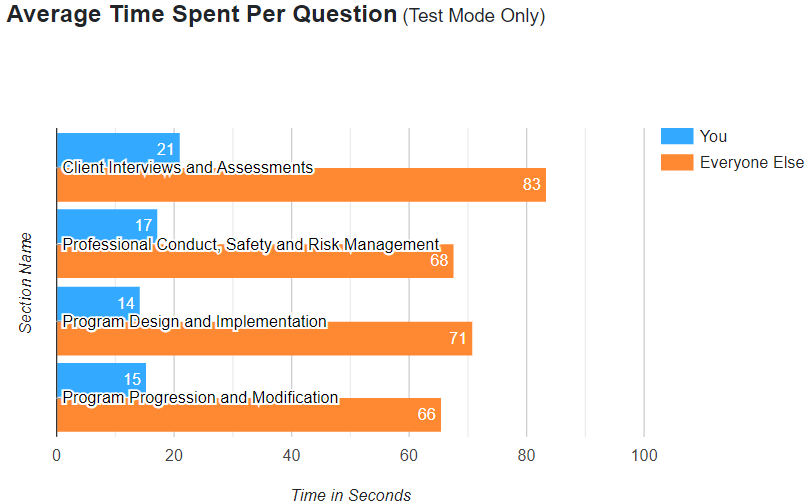
View your practice testing results and track progress in real time
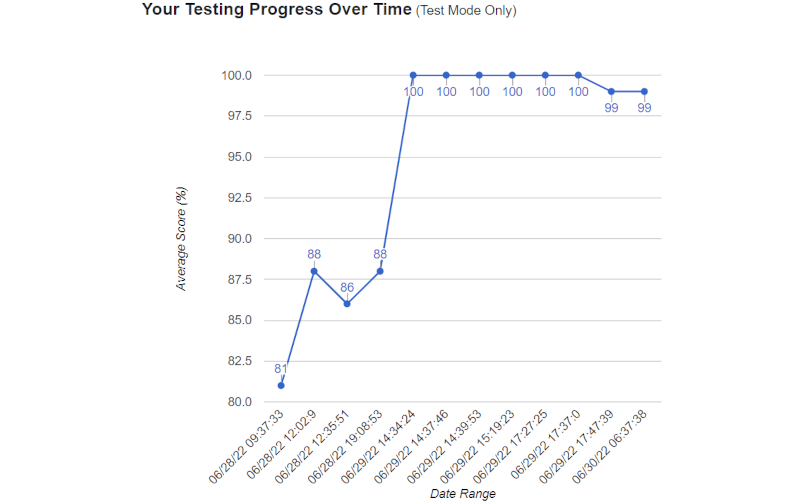
Since 2009, we've helped millions of people prepare for their professional exam
"I have & will continue to refer your testing service to people... I appreciate your diligence and the fact that you cared enough to contact me again... Your customer service & dedication to your customers is what has obviously kept you successful."
- Hope
- Hope
"Just wanted to inform tests.com that I passed my test with a score of 86 today. Thank you for the assistance. I'll be sure to refer your website to others."
- Betty
- Betty
"I've spent lots of money on practice exams only to find myself "overwhelmed" with questions/topics I've never heard of! I've taken the practice exam on this site and discovered the questions the closest to what I've learned in school."
- Milton T.
- Milton T.


| 25 Key Advantages |  |
Other
Co. |
|
|---|---|---|---|
| 1. Elite Exam Writers | YES. Our practice exams and other material were written by experts in their field with top experience, education and overall credentials (see top right column of this page) so our content quality is second to none. If you're comparing our practice exam to another company's, do you know who wrote their material? | ? | |
| 2. Instant Use Anywhere | YES. Get it now! Instant Access Online Study on your schedule.
Online + Mobile + Printable + Audio Flashcards
|
? | |
| 3. Unlimited Access | YES. Unlimited 24/7 access. Study when you need it. No recurring charges. | ? | |
| 4.Customer Satisfaction | YES. Our return rate is only about 3% compared to an e-commerce average of about 8%. Example: "Thanks for your product. I used it quite a bit and passed the test the first time!!!" - Brad It is no wonder we have an A BBB rating. | ? | |
| 5. Support & Service | YES. Our practice exam authors, peer reviewers, editors, technical support are responsive to your needs and dedicated to you passing your exam the first time. Testimonial: "I have & will continue to refer your testing service to people... I appreciate your diligence and the fact that you cared enough tocontact me again... Your customer service & dedication to your customers is what has obviously kept you successful."- Hope | ? | |
| 6. Free Question Updates | YES. When we add new questions, you get them Free! | ? | |
 |
7.  |
YES. Optionally simulate exam conditions. TestSIM™ is easy and flexible to use. More... | NO |
8.  |
YES. With TestNOTES™, you have option to type notes for any question for instant reinforcement & later review. | NO | |
9.  |
YES. Our Focus Flash Cards™ online study system allows you tocustomize study by time, section(s) and more. Create/share your own too. Not included in our Postal Practice Exam. | NO | |
| 10. Study Mode Option | YES. You have the option to test with instant prompts for incorrect answers and explanations of correct answers. | ? | |
| 11. Prep What You Need | YES. Choose whole test or practice by the section. Unlike subscription products, our material covers what you need to know without redundancy. | ? | |
| 12. Easy Read Questions | YES. Your online account format displays one question at a time. See Example. | ? | |
| 13. Flexible Testing | YES. Set the number of questions and time limit to your needs OR simulate your actual exam. Choose Sequential or Random question order. See Example. | ? | |
| 14. Instant Scoring | YES.The Online format automatically scores your test as you go and when complete. | ? | |
| 15. Reporting / Stats | YES. View your results and track progress in real time with easy to read tables and graphs. See Example. | ? | |
| 16. Test / Exam Review | YES. A great reference for the who, what, why, where and how of the actual exam. | ? | |
| 17. Testing Tips | YES. Specific action tips to improve your score. | ? | |
| 18. Printable | YES | ? | |
| 19.Computer / Tablet / Phone | YES. Guaranteed to work with your device or money back. | ? | |
| 20. Audio Enabled | YES. Our Focus FlashCards Online Study System is audio enabled so you can walk on the beach and listen to your flash cards, advancing them as you want or setting them on autoplay. | ? | |
| 21. University Tested | YES. Our system is so good that colleges and universities use it to prepare their graduating students for their certification exams. | ? | |
| 22. Proven Results | YES. Since 2011, tests.com has helped millions of people prepare for their tests. | ? | |
| 23. Future Online Testing | YES. Tests.com has 300 test categories and growing. Get one test system to take your tests with unlimited access. | ? | |
| 24. 100% Pass Guarantee | YES. Pass your exam - guaranteed or your money back. Also, if you are not satisfied for any reason, let us know and you will receive a full refund. Either way, there is no risk to you for trying. Click here for details. | ? | |
| 25. Best Overall Buy | YES. Overall, only tests.com offers these 25 Key Advantages and guarantees your results. | NO | |
Testing Resources
Psychometric Degree Programs
The Psychometrics Centre at the University of Cambridge
UK's leading organization for the study and application of of psychometrics offers a PhD Psychometrics program.
Ph.D. in Psychometrics at Fordham University
this program focuses on the quantitative, research-oriented commonalities relevant to most of the behavioral sciences.